


Flying Ants or Swarming Termites?
There are lots of winged insects in the world. This makes it hard to recognize a wood-destroying pest when we see one. But it is actually easier than you might think. Let's take a look.
Flying Ants
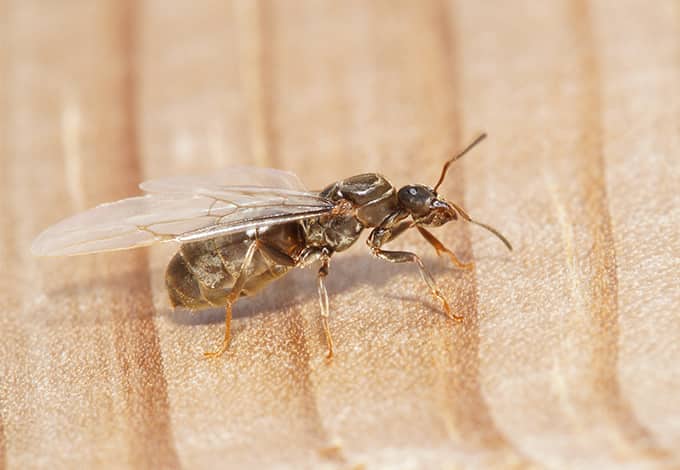
The ant that chews on a home's wood is a carpenter ant, and carpenter ants are the largest ant you're going to see climbing (hopefully, on the outside) of your home. A carpenter ant swarmer can be as long as an inch in length. They are usually black, but they may be a mix of black, dark red, and yellow, depending on what species you're looking at. And, being a large ant, you'll be able to look to see if it has 1 node between its thorax and abdomen. If it does, you have yourself a carpenter ant.
home inspection today!



-
Excellent care and well-experienced! CJ Z.
-
I highly recommend Parkway. Jullian D.
-
Great service! Thomas F.
-
Knowledgeable, great service. Jean R.
-
Parkway is the way to go. Glenn K.
-
Good costumer service! Patty M.
-
Amazing company and great service. D. Hunsaker
-
I was pleased with his knowledge and professionalism. Joseph C.
-
I would certainly use them in the future if need be. Debra C.
Is It Important To Be Able To Tell The Difference?
If you identify either of these two insects crawling on your property, it is time to call a pest control company, but it is important to know that carpenter ants and termites do not present the same threat to your equity. There are three main reasons why.
- Carpenter ants don't consume wood. Your home is not a food source for these insects. They create tunnels and galleries in wood to establish a safe place to put their nests. Their goal is not to systematically consume every inch of your support timbers.
- Subterranean termites eat wood. When a carpenter ant infestation takes root in a structure, it is often detected because of the frass (sawdust) that carpenter ants push out of their tunnels. When deposited in a location that can be seen, this frass will prompt a property owner to take action. Termites eat wood. They do not need to push anything out of their tunnels. So they can feed on a structure for years without being detected.